
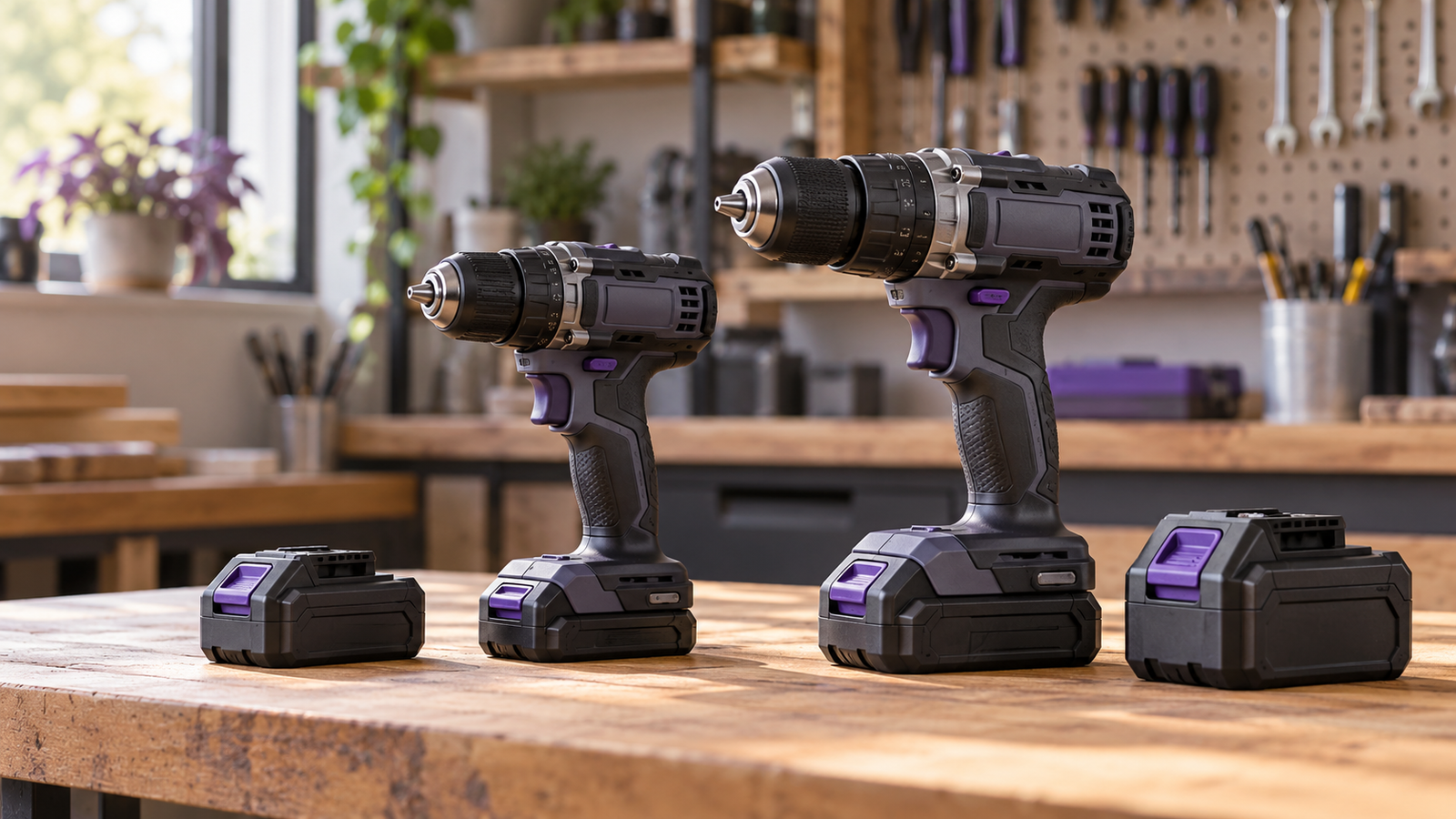
Cordless Tool Battery Compatibility in Canada: Check Before You Buy
Thinking of adding a bare tool to the cordless tools you already own? Check battery and charger compatibility before comparing prices. The labels “18V” and “20V MAX” alone do not tell you whether a specific pack will power a specific tool. Compatibility depends on the manufacturer’s platform and the exact tool, battery and charger models.
Research note: This is a research-based guide, not a hands-on battery test. We use manufacturer compatibility information and manuals; listings and specifications can change. Confirm the exact Canadian model before purchase.
Start with the model numbers
Write down the full model number of the tool and the battery you plan to use. Then check the tool’s manual or official product page for the named battery family. A brand can sell several cordless systems, and a similar voltage label or the same brand name is not enough to establish compatibility.
Check the charger separately. A battery may fit a tool but still require a different charger. Some chargers are designed for more than one family, but that support is model-specific.
What the main platform names tell you
DEWALT: 20V MAX and FLEXVOLT
DEWALT’s Canadian 20V MAX information explains that “20V MAX” refers to maximum initial voltage measured without a workload; nominal voltage is 18V. That naming difference does not make every 18V or 20V battery interchangeable. Check the battery family named for your exact tool. DEWALT also identifies FLEXVOLT batteries separately and describes their use across specified 20V MAX and 60V MAX tools. Start with the model listing and manual, not the number printed on the pack.
Manufacturer reference: DEWALT Canada 20V MAX system.
Milwaukee: M12 and M18 are separate families
Milwaukee Canada states that M18 batteries fit M18 tools and chargers, while M12 batteries fit M12 tools and chargers. The two platform names are the useful first check. Some Milwaukee chargers, including the named M18 & M12 Rapid Charger, accept packs from both families. That is charger compatibility; it does not mean an M12 battery runs an M18 tool. Confirm the exact charger model on the manufacturer’s page.
Manufacturer reference: Milwaukee Canada M18 batteries and chargers.
Makita: check CXT, LXT and XGT
Makita’s product pages identify CXT, LXT and XGT as distinct battery families. Do not assume a pack crosses from one family to another because the brand matches. There are specific exceptions for products and accessories that explicitly list more than one platform. For example, Makita Canada’s ADP10 adapter lets named 40V max XGT chargers charge 18V LXT batteries. That is a charger adapter; it is not a statement that an LXT battery fits an XGT tool. Read the compatibility line for the exact product.
Manufacturer references: Makita Canada XGT system and the ADP10 charger-adapter listing.
Capacity, weight and the ready-to-work cost
Once the platform matches, compare battery capacity, size and weight for the work you actually do. An amp-hour rating can help compare packs within a family, but it does not promise a fixed runtime across different tools or tasks. A compact pack may make a drill easier to handle overhead; a larger pack may reduce battery changes during longer work, while adding weight and cost. Use manufacturer specifications for the exact pack and tool, and treat runtime claims as conditional on the test setup.
For a bare tool, add the cost of any compatible battery and charger you still need. If you already own a pack, check its exact model, condition and compatibility rather than assuming it is a saving. Our Canadian cordless-tool kit cost checklist walks through the full ready-to-use comparison.
A quick checklist before checkout
- Match the exact tool model number to the manufacturer’s battery-platform listing.
- Confirm the battery model is named as compatible with that tool.
- Confirm the charger model supports that battery, including any specifically required adapter.
- Check whether the price is for a bare tool or a complete kit, and list what is in the box.
- Compare the total cost of tool, battery and charger against a kit, shipping, tax and the seller’s return terms.
- Read the current manual for battery, charger and tool instructions before use.
If the product page and manual do not confirm the combination, ask the manufacturer before buying or using it. Do not infer compatibility from the voltage number, connector shape or a third-party adapter listing.
Related guides
- 18V vs. 20V MAX: what Canadian buyers should compare
- How to choose a cordless drill in Canada
- Milwaukee 2903-20 drill/driver guide
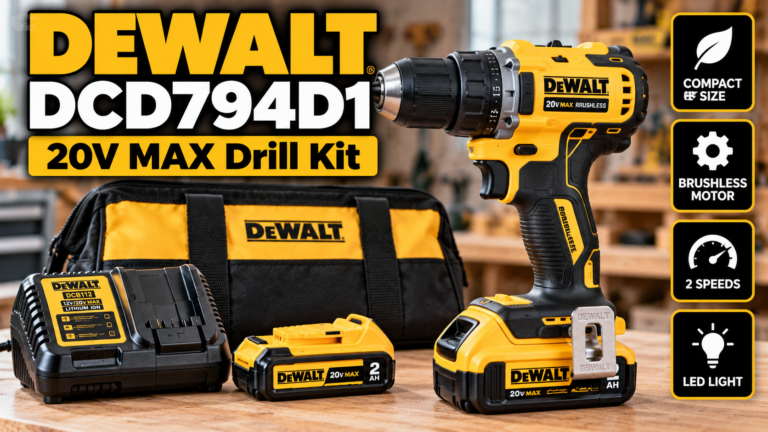
- DEWALT DCD794D1 drill-kit guide
Disclosure: Fairy Reviews may earn a commission from qualifying affiliate links on some pages. This guide contains no affiliate purchase links. No batteries or tools were hands-on tested for this article.
2 Comments