
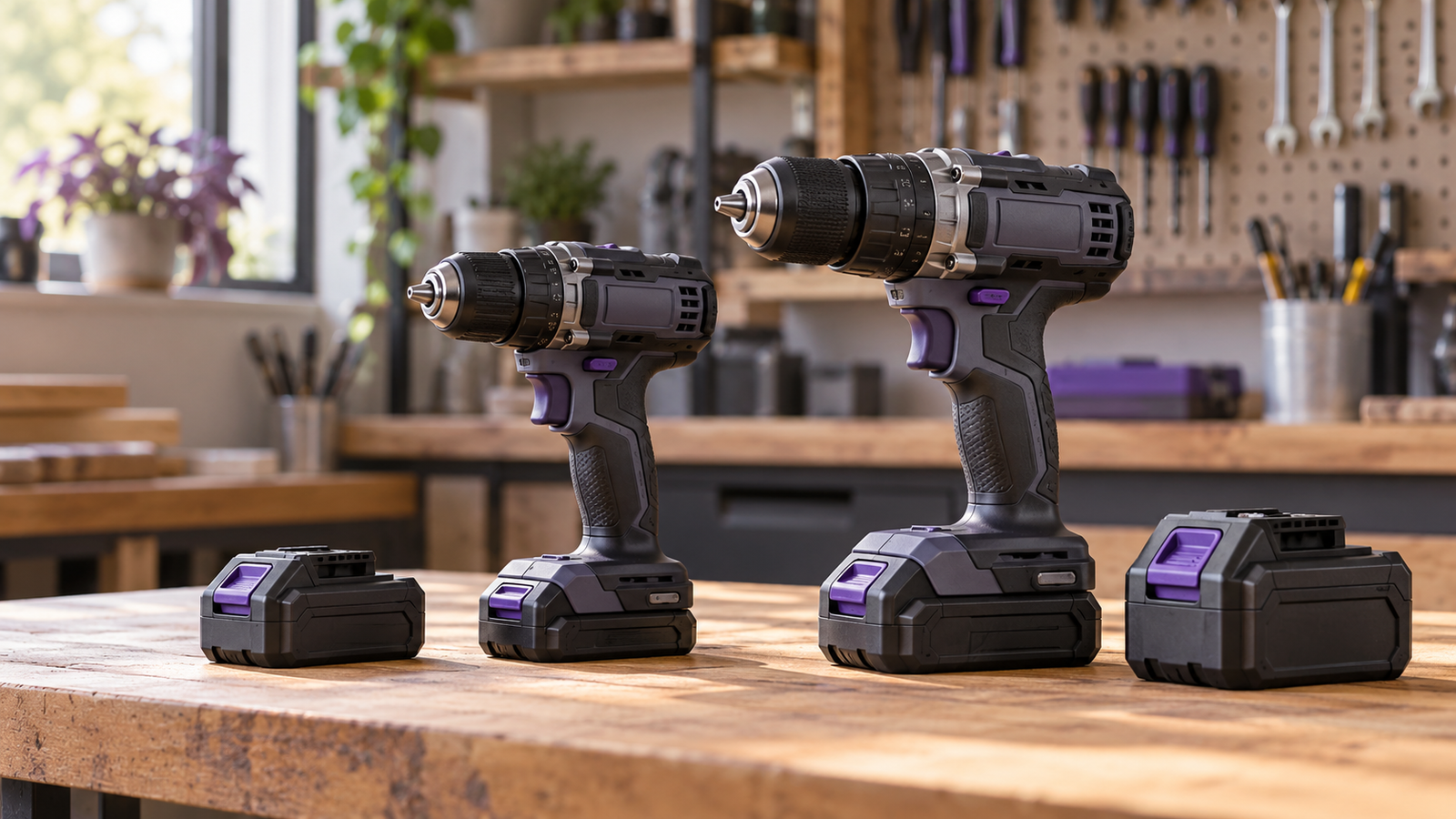
18V vs. 20V MAX Tools: What Canadian Buyers Should Compare
Editorial note: This guide explains product labels and comparison methods using manufacturer information. It is not a hands-on test, does not rank competing tools, and contains no affiliate links.
The short answer: do not compare “18V” and “20V MAX” as if the numbers were a direct performance score. DEWALT explains that its 20V MAX label refers to maximum initial battery voltage measured without a workload, while nominal voltage is 18 volts. That explains DEWALT’s label; it does not create a universal ranking between every 18V and 20V tool. See the DEWALT manufacturer explanation.
Voltage labels are not a performance ranking
The naming differs across product families: Makita says its LXT system uses 18V slide-style batteries, Milwaukee calls its platform M18, and DEWALT labels many tools 20V MAX. These are brand-specific platform labels, not a performance ranking. See the Makita Canada LXT 18V system overview and Milwaukee M18 FUEL 2903-20 drill/driver page for examples.
Even within one brand, drills in the same voltage family can differ in size, motor, gearing, controls and intended workload. “20 is more than 18” is not a useful shopping conclusion by itself.
Compare the exact tool and battery
- Exact model number: Similar product names can refer to different generations, kits or regional variants.
- Tool function: A drill/driver, hammer drill/driver and impact driver do different jobs.
- Comparable performance data: Use the same task and test method where available. A maximum torque claim is not a universal cross-brand ranking.
- Weight in the same configuration: Compare both tools with a battery attached, not one bare tool against one complete kit.
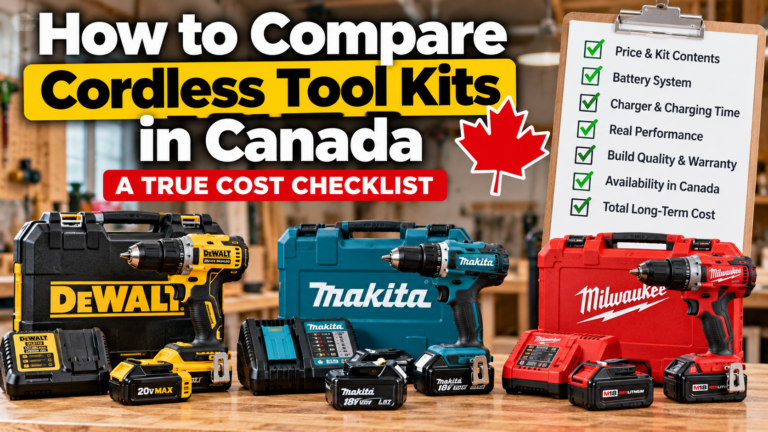
- Kit contents: Record the exact battery model, amp-hour rating, charger and case. One-battery and two-battery kits are not directly comparable by sticker price.
- Platform compatibility: Check the manufacturer’s compatibility information for the exact tool and battery. Similar voltage numbers do not make battery packs interchangeable.
- Canadian support: Confirm the local model, warranty terms, seller and return policy.
Do the battery-platform math
For a first cordless purchase, the platform is a longer-term decision. Estimate the cost of the initial kit and the next one or two tools you are likely to buy. Include batteries and chargers you would otherwise need again. A tool-only version can be good value when you already own a compatible battery and charger; it can be poor value when you are starting from zero.
The useful comparison is the total cost to do your work, not a bare-tool price against a complete kit. Canadian promotions and stock change, so check the current listing on the day you buy and compare the exact model number.
A Canadian buying checklist
- Does the listing show the exact model number?
- Does the kit include a battery and charger, and what are their model numbers?
- Can the seller provide the stated Canadian warranty?
- Are shipping, taxes, return terms and included accessories clear?
- Will this platform support your likely next tool purchase?
- Does the tool’s size and weight match the jobs you actually do?
The takeaway
18V and 20V MAX labels do not settle which tool to buy. Choose between exact models by matching the tool to the job, comparing a complete kit, checking battery compatibility and verifying Canadian support. For a step-by-step drill selection checklist, read our cordless drill buying guide for Canada.
Explore the Power Tools Canada guide hub for more tool-buying resources.
For a model-by-model check of battery and charger families, see our cordless tool battery compatibility guide for Canada.
6 Comments